
Follow This Easy System for Defeating the Blank Page
Sitting down to write a social media post can be hard. It is even harder still when the first thing you have to do is decide what to write about.
You open LinkedIn. You stare at the empty box. You think about a few ideas. You decide none of them is very good.
Twenty minutes later, you still haven’t written anything. The problem may not be writing; it may be starting with a blank page.
Stop looking for ideas when you need them
Most bookkeepers already come across things worth talking about during an ordinary workday.
A client asks why you need a particular document. You explain something that seems obvious to you but isn’t obvious to them. You notice the same mistake for the third time. Someone asks what a particular bookkeeping service actually includes.
Any one of those could become a post. The trick is to notice those moments as they happen. Don’t wait until three days later when it’s time for your marketing.
Keep one place for ideas
You don’t need a content management system. You need somewhere to write down a few words.
Use a Google Doc, a note on your phone, a spreadsheet, or even a notebook. The tool is less important than maintaining consistency in using the same place. And don’t stop what you’re doing to write the post.
“Client asked why bank reconciliation matters.” That’s enough.
When another question or idea comes up, add another line. Over time, you’ll build a small collection of topics you understand. This is better than a list of things you found online that don’t excite you.
When it’s time to write
Now your marketing session begins with a different approach. Instead of asking “What should I post about?”, open your idea list and choose one.
Then ask: What would I tell a client about this? Suppose you wrote down mixing business and personal expenses.
You might explain why separating them makes bookkeeping easier. Or talk about one problem that happens when they’re mixed. Or share one simple way a business owner can make things easier going forward.
You’re not trying to become a content creator. You’re expressing something that you often clarify in your work.
One idea can do more than one job
You don’t have to cross an idea off your list once you’ve used it. A question about bookkeeping cleanups could become a LinkedIn post this week. Later, you might write about signs a business needs a cleanup. Then it could evolve into a full blog post.
You’re still discussing the same topic, but each time, you help people understand a new aspect of it. That matters because thinking you always need new topics can make marketing tougher. You don’t.
Make collecting ideas part of the routine
The goal isn’t to build an enormous idea bank. It’s simply to have something to work with when it’s marketing time. During the week, take notice of the questions, explanations, and conversations that come up in your work. Capture these in one place.
Then when your 30-minute marketing time comes around, you already know where to start.
No hunting for ideas.
And no blank page.
If you’re wondering…
How many content ideas should I keep?
You don’t need a huge idea bank. Ten or fifteen useful ideas are plenty to get started. Keep adding to it naturally as questions and topics come up.
What if my ideas seem too basic?
Basic to you doesn’t mean basic to your clients. The things you explain regularly are often useful precisely because clients don’t know them.
Do I need a special content-planning tool?
No. Use something you’ll actually open and update. A simple Google Doc or note can work just as well as a dedicated content-planning system.
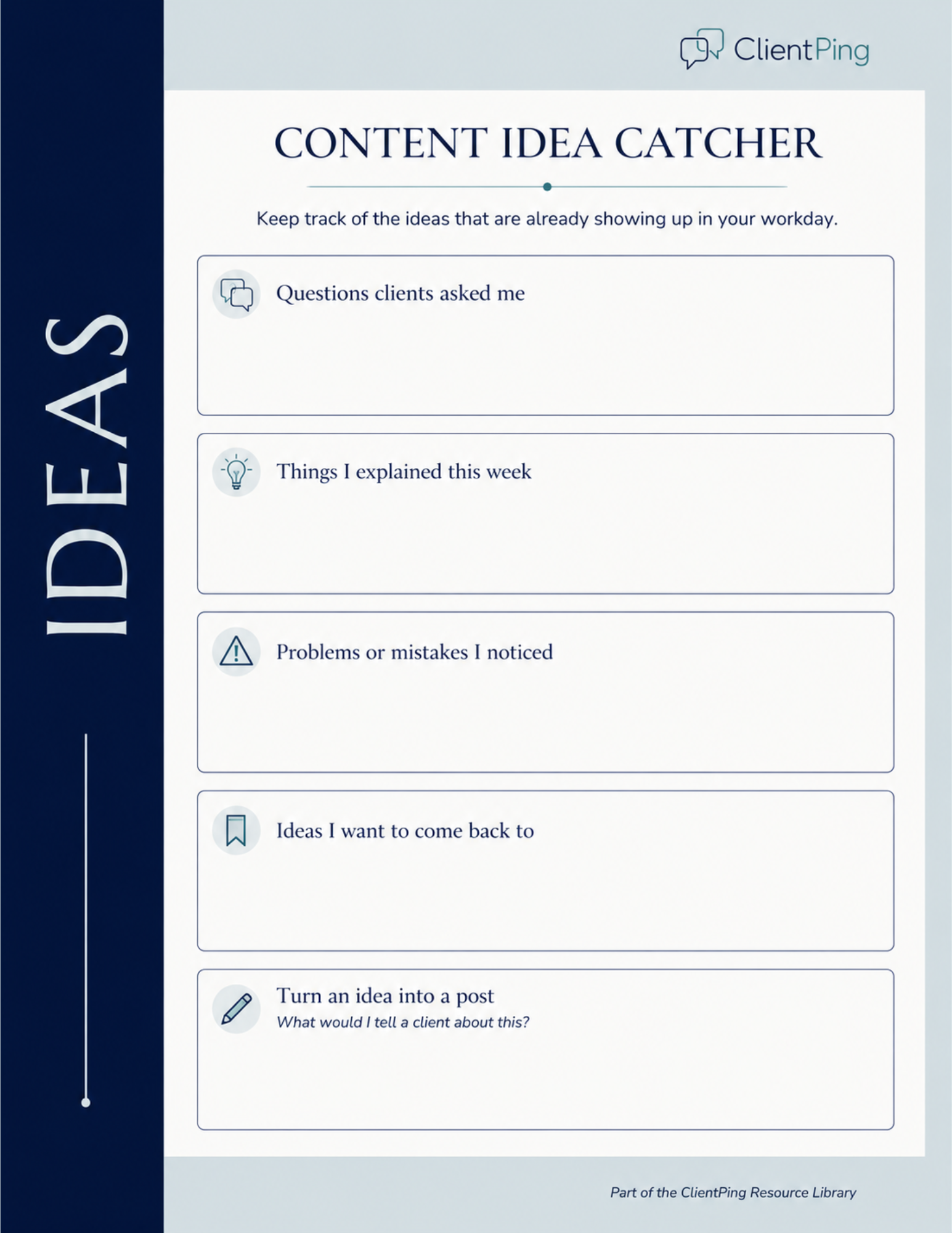
Free Content Idea Catcher
Never lose another good content idea. Use this simple worksheet to capture ideas as they come to you, so you’ll have something to work with the next time you sit down to create content.
Get Your Free Ping Starter Kit
Includes a blog post, client email, social posts, and a Quick Start Guide.
More to explore
-
A Simple Mid-Year Communication Check-In for Bookkeepers
It’s easy for communication to slip during busy seasons. This mid-year check-in will help you take stock of how visible you’ve been, reconnect with clients and prospects, and choose a simple communication habit you can maintain.
-
How to Stay in Touch with Clients Without Feeling Like a Bother
Staying in touch doesn’t have to feel uncomfortable or intrusive. A simple, thoughtful approach helps you stay connected in a way that feels natural for both you and your clients.
-
Price with Confidence — How to Better Value Your Work
Pricing conversations often focus on finding the perfect formula. But confidence in your pricing starts with understanding the value of the professional bookkeeping work you already provide.